Zac Unger on how Oakland will deal with SB79
by Zac Unger, District 1 Councilmember
The City Council has voted on some action around implementing SB 79. View the legislation and exhibits here.
A Message from Your District 1 Councilmember on SB 79
I know many of you are concerned about SB 79, and I want to explain as clearly as I can what it means for our district and what the City is doing about it. This is genuinely complicated, so bear with me.
What SB 79 Does
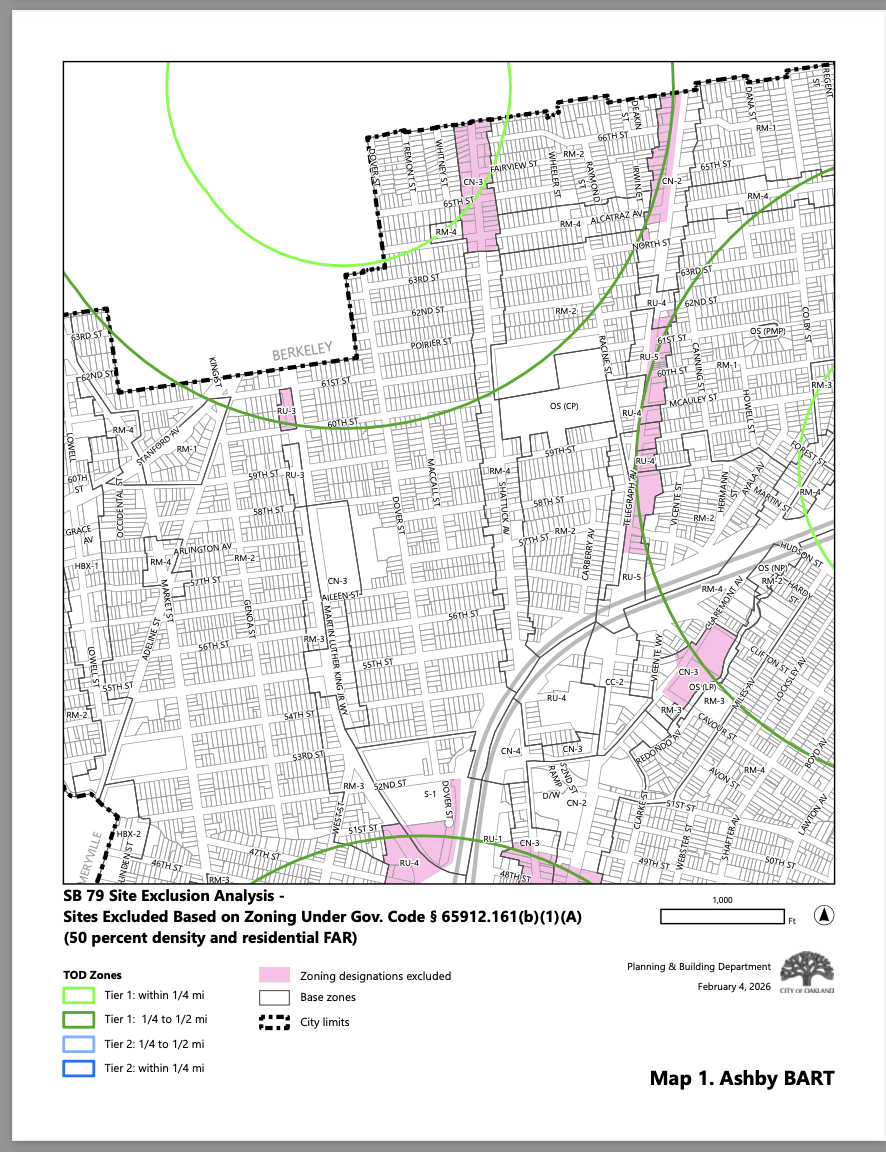
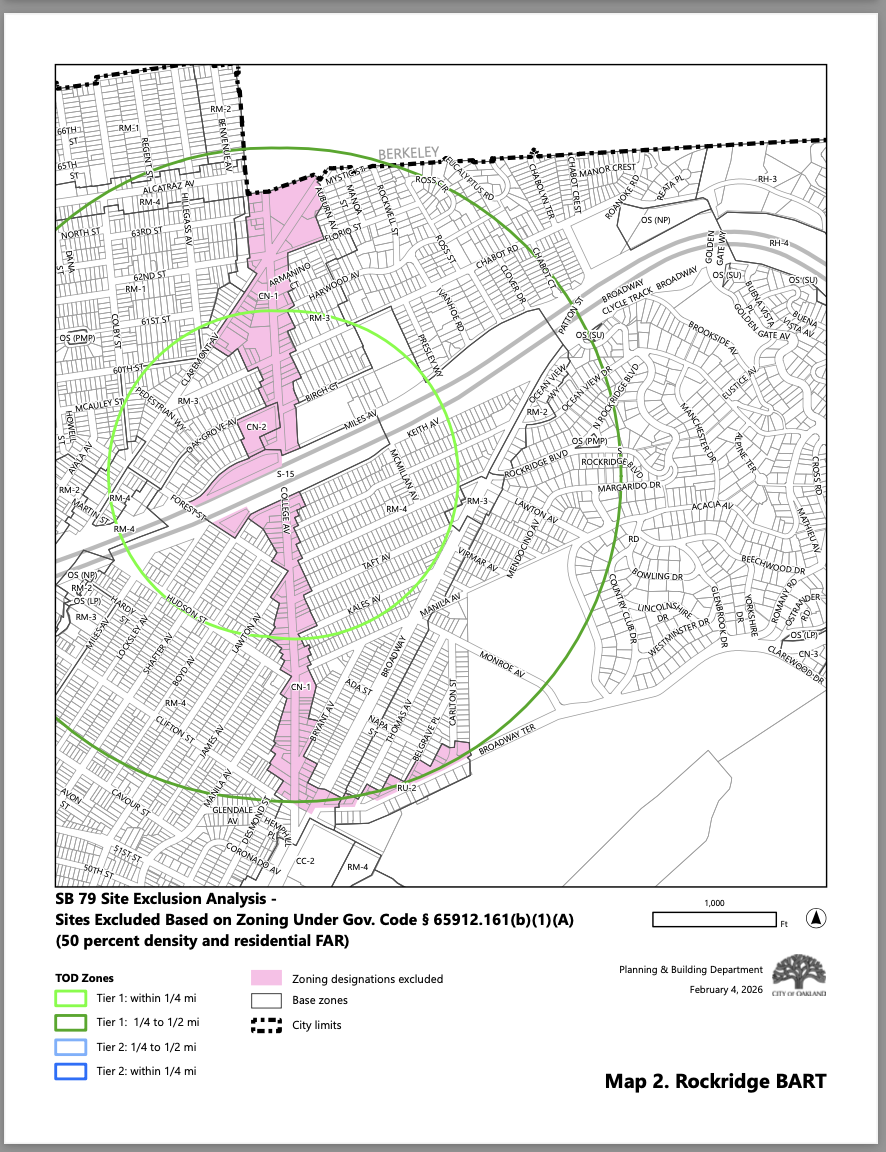
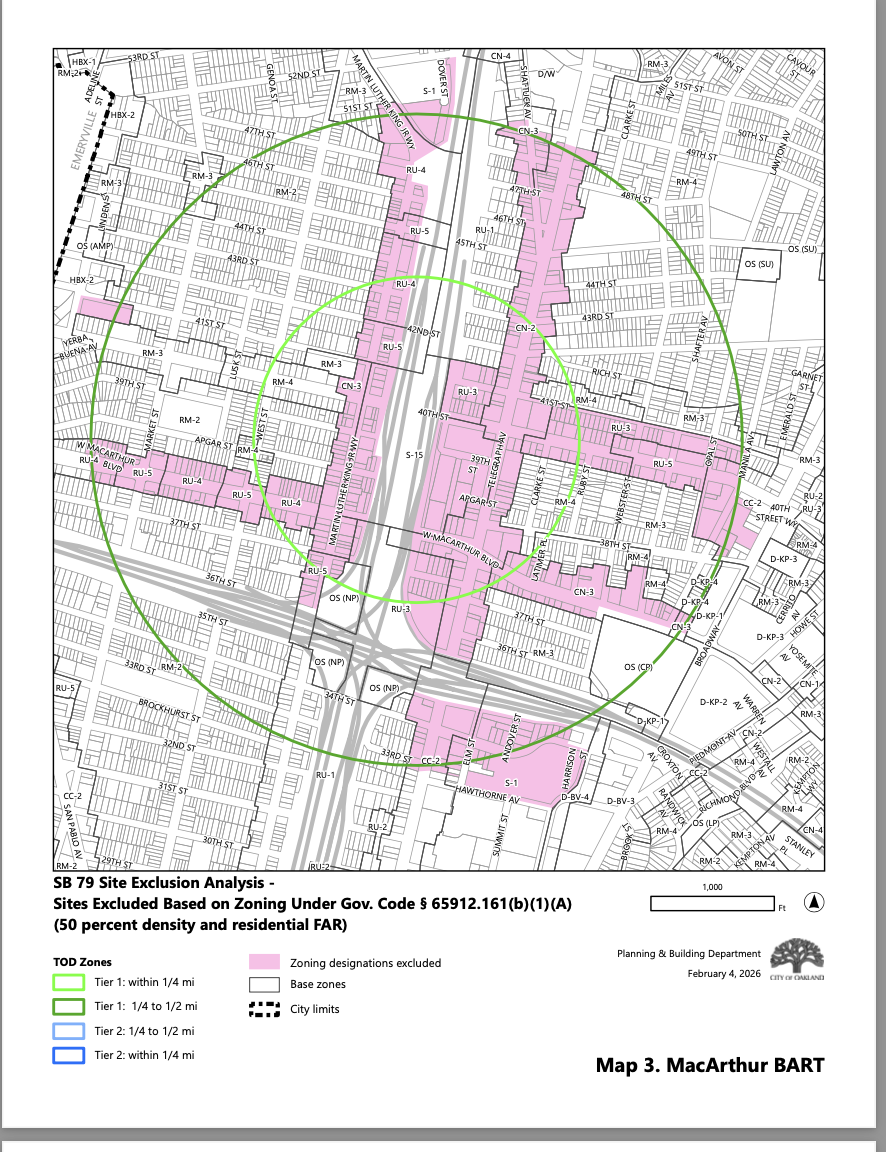
Last year, Governor Newsom signed SB 79 into law. Starting July 1, 2026, it automatically overrides local zoning to allow taller buildings and higher residential density within a certain radius of qualifying transit stations. District 1 has three of them — MacArthur BART, Rockridge BART, and portions of Ashby BART — and all three fall into the highest category (Tier 1), which means the largest allowable increases in height and density.
What Oakland Can and Can't Do
Cities have limited options under this law. In parts of Oakland that are designated "low-resource" — meaning areas where residents have less access to quality schools, jobs, transit, and a healthy environment — we can pause SB 79's effect while we develop an alternative plan. We are doing that in Downtown, West Oakland, and East Oakland.
District 1 does not qualify for that pause. Our neighborhoods are designated "high-resource" or "high-opportunity" under state mapping — meaning the state has determined that residents here already have strong access to good schools, employment, transit, and environmental quality. Because of that designation, the upzoning takes effect automatically in most of the area, with no option to delay it the way lower-resource areas can.
The remaining question is what to do about the commercial corridors — College, Broadway, Telegraph, 40th Street, and similar streets — shown in pink on the zoning maps. These areas already have relatively high zoning, which means we could temporarily exclude them from SB 79. But here's the catch: if we hold the corridors back, we'd actually end up with lower allowable density on those main streets than on the quieter interior residential streets behind them. That is backwards from sound planning.
It has long been City policy — and my own view — that new development belongs on the corridors, not tucked into interior neighborhoods. Holding the corridors back would undermine that. For that reason, I support letting SB 79 take full effect on the corridors so that development pressure flows toward them rather than toward your residential streets. The Planning Commission agreed, voting 6–0 in support of this approach.
The Longer-Term Plan — and What It Means for Your Street
Regardless of these near-term decisions, Oakland has the option to create an alternative plan — and we are doing exactly that through our General Plan update, which is already underway. This is fortunate timing, since a full General Plan update only happens every few decades.
Through this process, we have the ability to redistribute some of the density that SB 79 assigns to interior residential areas and shift it onto the corridors instead. The law allows this as long as certain minimums are met across the city and around each transit station. I am committed to doing this as much as possible in D1.
In practical terms, that means our corridors will ultimately be zoned for even greater density than SB 79 alone would require — so that interior residential streets can be held to lower densities. If you are worried about dramatic change coming to your block, this is the plan most likely to protect it. The General Plan update is expected to be completed next year, at which point we will have a new long-term zoning map for Oakland.
A Few Final Thoughts
I understand that some residents see this as an overreach by the State, and I respect that view. But it's also true that if neighborhoods like ours had done more over the years to accommodate housing growth, we likely wouldn't be here. Our housing crisis is decades old and not improving on its own — which is why I, along with many city and state leaders, have supported state intervention.
I also want to be honest: zoning changes alone won't produce a flood of new housing. Real change will require innovation in housing finance, particularly affordable housing. I'd love to see new units that are affordable, and many that offer homeownership opportunities — for first-time buyers and for longtime neighbors who want to downsize without leaving the area. That will take real investment and creativity at both the state and local level.
We will soon have a new zoning map, and I hope we can move forward together focused on our shared values of affordability and opportunity. I'm committed to making this process as understandable as possible as we go.
For more information about SB79, read this blog posting.