

Park District, Local Volunteers Aim to Resuscitate Lake Temescal
By Skip Fogarty
One of the three original East Bay Regional Parks, Lake Temescal is an urban oasis providing beauty and recreation on Oakland’s northern edge. Opened in 1932, the park has long been known for its picnicking, hiking, and fishing — and especially for its swimming facilities and related programs.
But at various times over the past several summers, the approximately 13-acre lake has been closed to swimmers due to toxic blue-green algal blooms.
“I've been a Lake Temescal swimmer for 30 years,” Rockridge neighbor Bradley Mart said. “Until a few years ago, the lake was usually open by Memorial Day and swimmable until October. But the persistent algae has complicated things.”
For Mart, Lake Anza in Tilden Park has often become the better choice, or he opts to swim in the Bay. Still, he said, “We love the lake and hope to see it brought back to its prime.”
On Nextdoor, neighbor Pam L. posted: “[The lake] needs to be dredged and brought back to life. I have so many memories swimming as a kid and bringing my own kids there. It’s still beautiful, but I’m not eager to swim in it.”
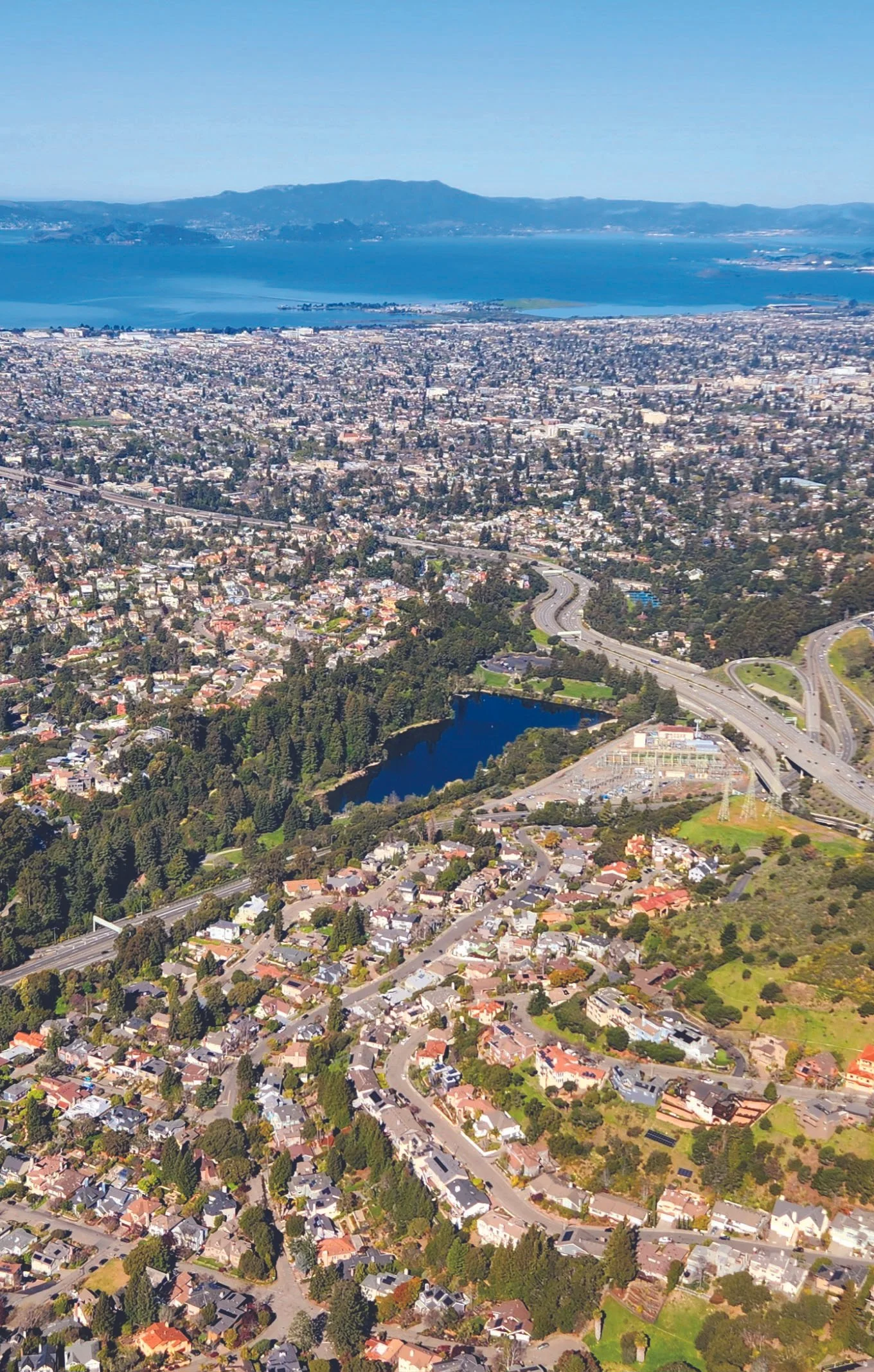
Photo courtesy of the East Bay Regional Parks District.
The Park District has been studying potential solutions for several years.
District spokesperson Jen Vanya pointed to recent progress in improving the water quality. “In June 2025, the Park District installed an oxygen saturation technology system in the lake,” she said. “Before the installation, the low level of dissolved oxygen at the bottom would negatively impact fish and other aquatic organisms.”
Vanya noted that although the system is designed for deeper, more stratified lakes than Temescal, “the installation has made a big difference for the lake’s water quality.”
The oxygenation equipment is mostly unseen at the bottom of the lake, but the oxygen generator itself is located near the New Deal-era beach house, in a small shed that includes an interesting diagram of how the system works.
Ultimately, though, it’s decades of sediment from the surrounding watershed, housing construction, fertilizer runoff, and highway development that’s reduced the lake’s average depth to just 15 feet.
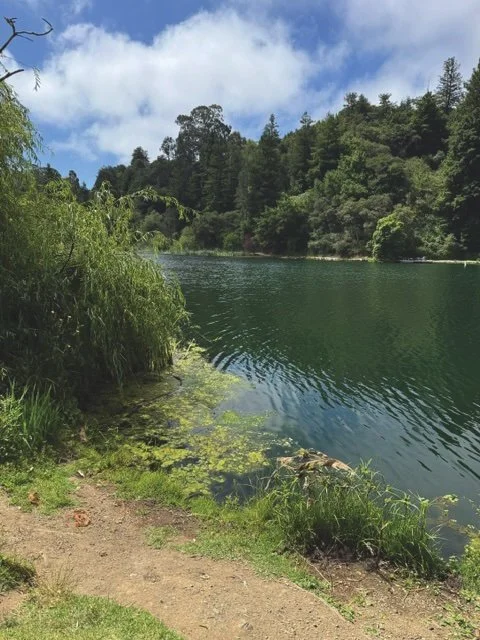
Photo by Skip Fogarty.
When Anthony Chabot built the earthen dam that created the reservoir in 1868, the depth reached 80 feet. But today’s shallower water is warmer, and nutrient-rich sediment feeds dangerous bacterial blooms, which render the lake off-limits.
District Board Member Lynda Deschambault offered more encouraging news. “We’ve recently budgeted $800,000 for a feasibility study on identifying long-term options… and I’m happy to report that recent changes in aeration and treatment have been successful at lowering the algal blooms,” she said.
Timelines indicate that the District will review engineering proposals this summer and identify the preferred project approach this fall. Preliminary design and further financial analysis would extend to December 2027.
Deschambault also credited support from elected officials, including Zac Unger (City Council District 1) and Nikki Furtunato Bas (Alameda County Board of Supervisors District 5), and Mayor Barbara Lee, as well as volunteer groups in the community like Friends of Lake Temescal.
Garbage left around the lake by fishermen is also an environmental issue for the park. Hooks, lures, and monofilament fishing line endanger and often entangle birds, turtles, and pets. In response, local Eagle Scouts and school groups have worked on shoreline clean-ups and installed receptacles for discarded fishing line.
Friends of Lake Temescal volunteer Jeff Kahn maintained that dredging is the key to restoring safe swimming. He noted that the “loose-knit, but passionate group” has been advocating for environmental improvements for 7 years.
More recently, the Friends group was instrumental in getting the City Council to shelve, for the time being, a proposal for two massive illuminated billboards that would have overlooked the park.
In the meantime, a recent check of the park’s water quality dashboard indicates the lake is open for swimming. At present, it’s free to park and swim at the park. Automated ticketing kiosks are in the works, according to the district spokesperson, but the 2026 swim season will remain free of charge.
To learn more about the Temescal water quality project, visit the EBRPD website.
